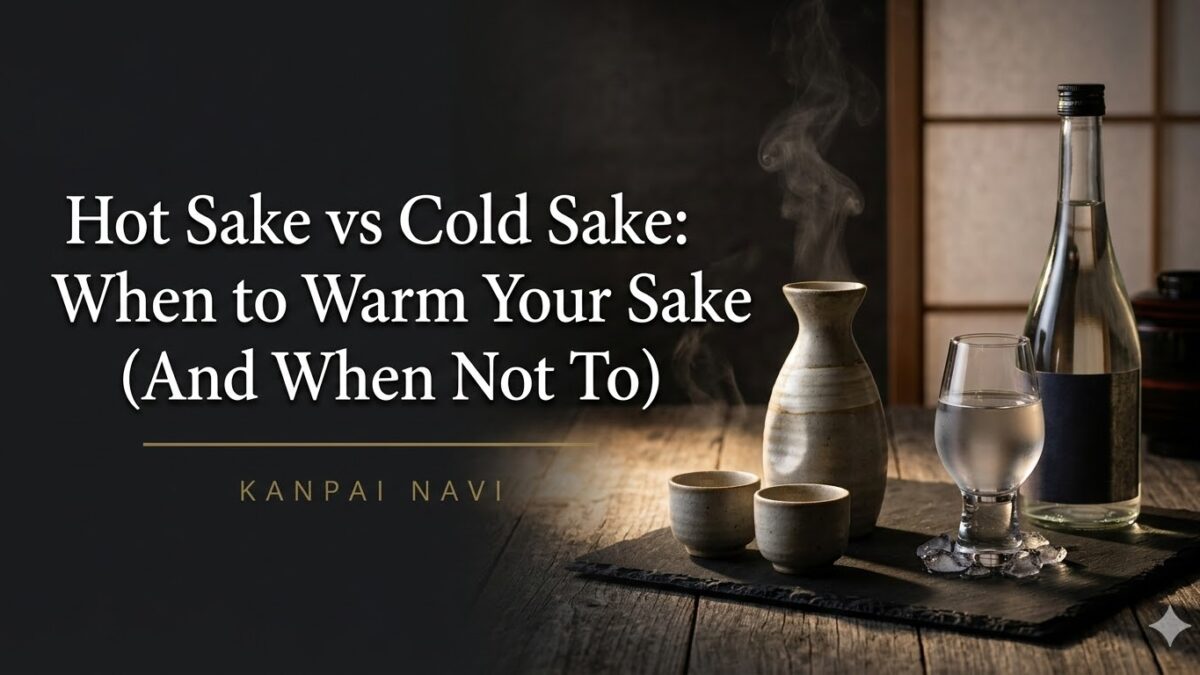
Hot Sake vs Cold Sake: When to Warm Your Sake (And When Not To)
What You’ll Learn in This Article
Walk into any Japanese izakaya on a cold evening and you’ll see ceramic flasks of hot sake on nearly every table. Warming sake — known as kanzake (燗酒) in Japanese — is one of the oldest and most beloved ways to enjoy Japanese rice wine. It transforms the drinking experience completely, unlocking rich, savory notes that cold serving temperatures keep hidden.
But here’s what most guides get wrong: not all sake should be heated. Warming the wrong bottle can destroy its delicate aromas and waste your money. The key is matching the right sake to the right temperature — and understanding exactly how heat changes what’s in your glass.

Supervised by
Daichi Takemoto
Authentic Bartender & Owner of Obanzai Nanchatte, Kobe
With 8 years of experience as a professional bartender and now the owner of "Obanzai Nanchatte" in Kobe, Daichi brings hands-on expertise in Japanese sake, whisky, and food pairing to every article on Kanpai Navi.
Table of Contents
- What Is Hot Sake?
- Japanese Sake Temperature Guide
- Which Sake to Warm (And Which to Keep Cold)
- Best Sake for Warming
- Sake to Keep Cold
- Quick Reference
- How to Heat Sake at Home
- Method 1: Hot Water Bath (Traditional — Best Results)
- Method 2: Microwave (Quick — Acceptable Results)
- Method 3: Electric Sake Warmer (Convenient — Consistent Results)
- Hot Sake Food Pairing
- Nurukan (40°C) — Gentle Warmth
- Jo-kan (45°C) — Nicely Warm
- Atsukan (50°C) — Hot
- Hot Sake vs Cold Sake
- Frequently Asked Questions
- Is hot sake lower quality than cold sake?
- What temperature should I heat sake to?
- Can I heat sake in the microwave?
- Does heating sake remove the alcohol?
- What is atsukan?
- Can you heat ginjo or daiginjo sake?
- The Bottom Line
What Is Hot Sake?
Hot sake (kanzake) is sake that has been gently warmed before serving, typically to temperatures between 30°C and 55°C (86°F–131°F). The practice dates back over a thousand years in Japan, with references to warmed sake appearing in 10th-century court literature.
Heating sake isn’t just about warmth and comfort — it fundamentally changes the flavor profile. Here’s what happens when you warm sake:
- Umami intensifies — heat amplifies the savory amino acids in sake, making the flavor richer and more satisfying
- Sweetness becomes rounder — sugar perception increases slightly, softening any sharp edges
- Aroma shifts — delicate fruity and floral notes diminish, while earthy, grain-forward, and lactic notes emerge
- Texture changes — warm sake feels fuller and more viscous on the palate
- Alcohol perception increases — the warmth makes the alcohol more noticeable, which is why overheating sake is a common mistake
This is why the type of sake you heat matters so much. A fruity daiginjo loses its best qualities when warmed, while a robust junmai comes alive.
Daichi Takemoto
There’s a saying in Japan: “sake that’s good hot is truly good sake.” A cheap sake often tastes better warm because the heat masks flaws. But a well-made junmai that’s delicious both cold and warm — that’s the mark of quality brewing.
Japanese Sake Temperature Guide
Japan has an incredibly detailed vocabulary for sake temperatures — far more nuanced than simply “hot” or “cold.” There are 10 traditional temperature levels, each with its own name and character. Understanding these levels is essential for getting the most out of your sake.
| Japanese Name | Translation | Temperature | Character |
|---|---|---|---|
| Yukibie (雪冷え) | Snow-cold | 5°C / 41°F | Very crisp, sharp. Suppresses aroma and flavor. |
| Hanabie (花冷え) | Flower-cold | 10°C / 50°F | Chilled, clean. Ideal for aromatic ginjo styles. |
| Suzubie (涼冷え) | Cool | 15°C / 59°F | Lightly chilled. Flavors begin to open gently. |
| Jo-on (常温) | Room temp | 20°C / 68°F | Full flavor expression. Reveals the sake’s true character. |
| Hinata-kan (日向燗) | Sunshine-warm | 30°C / 86°F | Barely warm. Subtle softening of flavors. |
| Hitohada-kan (人肌燗) | Body-temp warm | 35°C / 95°F | Gentle warmth. Umami begins to bloom. Smooth and comforting. |
| Nurukan (ぬる燗) | Lukewarm | 40°C / 104°F | The sweet spot for many sakes. Rich, balanced, aromatic. |
| Jo-kan (上燗) | Nicely warm | 45°C / 113°F | Noticeably warm. Savory depth, pronounced umami. |
| Atsukan (熱燗) | Hot | 50°C / 122°F | Hot and bold. Alcohol becomes more prominent. Good for robust sake. |
| Tobikiri-kan (飛びきり燗) | Extra hot | 55°C / 131°F | Very hot. Sharp, intense. Only for the most full-bodied styles. |
For most people exploring warm sake for the first time, nurukan (40°C) is the ideal starting point. It’s warm enough to transform the flavor profile without overpowering the sake’s natural character.
Daichi Takemoto
Most bars abroad just blast sake to atsukan (50°C) because it’s easy. But nurukan at 40°C is where the magic happens — the umami blooms, the texture softens, and the sake feels like a warm embrace. I always tell my guests: think warm, not hot.
Which Sake to Warm (And Which to Keep Cold)
This is the most important rule for hot sake: the style of sake determines whether heating improves or damages it. Here’s a practical guide.
Best Sake for Warming
These styles are enhanced by heat — their flavors open up and become more expressive:
- Junmai — The best all-around choice for warming. Rich, rice-forward, and full of umami that heat amplifies beautifully. Try at nurukan (40°C) to jo-kan (45°C).
- Honjozo — Clean and light with a crisp finish. Warming smooths it out and adds depth. Excellent at hitohada-kan (35°C) to nurukan (40°C).
- Futsushu (table sake) — Everyday sake often tastes better warm because heat rounds off rough edges. A bottle of Gekkeikan Traditional becomes genuinely enjoyable at 40-45°C.
- Kimoto / Yamahai — These traditional-method sakes have bold, lactic, gamey flavors that warming amplifies. They’re built for atsukan (50°C).
Sake to Keep Cold
These styles lose their defining qualities when heated — serve them chilled (5-15°C):
- Daiginjo / Junmai Daiginjo — The delicate fruity and floral aromas that make these premium sakes special evaporate with heat. Always serve cold.
- Ginjo / Junmai Ginjo — Similar to daiginjo. The aromatic esters are volatile and heat destroys them. Best at 5-10°C.
- Nama (unpasteurized) — Fresh and lively by design. Heat kills the freshness. Always cold.
- Sparkling sake — Carbonation and heat don’t mix. Always ice-cold.
Quick Reference
Here’s a simple decision chart:
| Sake Type | Warm? | Best Temperature |
|---|---|---|
| Junmai | Yes — excellent | 35-50°C |
| Honjozo | Yes — very good | 35-45°C |
| Futsushu | Yes — improves it | 40-50°C |
| Kimoto / Yamahai | Yes — built for it | 45-55°C |
| Junmai Ginjo | No — serve chilled | 5-10°C |
| Daiginjo | No — serve chilled | 5-10°C |
| Nama | No — always cold | 5-10°C |
| Sparkling | No — always cold | 3-7°C |
How to Heat Sake at Home
Heating sake properly is simple, but there are a few important rules: never boil it, never microwave it at full power, and always heat gently. Here are three reliable methods.
Method 1: Hot Water Bath (Traditional — Best Results)
This is the traditional Japanese method and produces the most even, controlled heating. It’s how sake is warmed in virtually every izakaya and Japanese restaurant.
- Pour sake into a tokkuri (ceramic flask) or a small heat-safe carafe. Fill to about 80% capacity.
- Heat water in a pot to about 70-80°C (160-175°F) — hot but not boiling.
- Remove the pot from heat and place the tokkuri in the hot water. The water level should reach about halfway up the flask.
- Wait 2-3 minutes for nurukan (40°C), or 4-5 minutes for atsukan (50°C).
- Test by touching the bottom of the tokkuri — it should feel comfortably warm, not burning hot.
Pro tip: Cover the top of the tokkuri with plastic wrap or a small dish to prevent aroma from escaping while heating.
Method 2: Microwave (Quick — Acceptable Results)
Not the purist’s choice, but it works in a pinch. The key is using low power and short intervals.
- Pour sake into a microwave-safe cup or carafe. Do NOT use a metal tokkuri.
- Cover loosely with plastic wrap.
- Microwave at 50% power for 30-second intervals.
- Stir gently between intervals to distribute heat evenly (microwaves create hot spots).
- For one cup (180ml), about 40-60 seconds total at 50% power reaches nurukan.
Warning: Full-power microwaving overheats the sake unevenly, creating bitter hot spots while other areas are still cold. Always use reduced power.
Method 3: Electric Sake Warmer (Convenient — Consistent Results)
Dedicated electric sake warmers (kanzukeki) are available online and maintain a precise temperature. Simply pour sake in, set the temperature, and wait. These are ideal for frequent warm sake drinkers.
Daichi Takemoto
At my bar, I always use the hot water bath method — it gives you the most control. Here’s a trick: once the sake is warm, take it out of the water and let it sit for 30 seconds. It continues to warm slightly from residual heat, and the flavors settle beautifully. Patience makes perfect kanzake.
Hot Sake Food Pairing
Warm sake is one of the most food-friendly beverages you can serve. The heat amplifies umami, which creates a natural bridge to savory dishes. Here are the best pairings for each temperature range.
Nurukan (40°C) — Gentle Warmth
- Sashimi and sushi — gentle warmth doesn’t overpower delicate fish
- Chawanmushi (savory egg custard) — temperature and texture harmony
- Light nimono (simmered vegetables) — umami meets umami
Jo-kan (45°C) — Nicely Warm
- Yakitori — smoky, salty grilled chicken pairs beautifully with warm junmai
- Tempura — warm sake cuts through the oil
- Oden — Japan’s classic winter stew is the definitive hot sake pairing
Atsukan (50°C) — Hot
- Nabe (hot pot) — rich, bold flavors need equally bold sake temperature
- Grilled fish — especially oily fish like saba (mackerel) or sanma (pike)
- Ramen — not traditional, but a hot sake alongside a rich tonkotsu bowl is deeply satisfying
Hot Sake vs Cold Sake
There’s no single “correct” temperature — each brings out different aspects of sake. Here’s a direct comparison to help you decide.
| Hot Sake (Kanzake) | Cold Sake (Reishu) | |
|---|---|---|
| Flavor emphasis | Umami, savory, grain | Fruity, floral, crisp |
| Aroma | Earthy, lactic, warm rice | Melon, pear, flowers |
| Body | Fuller, richer | Lighter, cleaner |
| Alcohol feel | More noticeable | Less noticeable |
| Best sake styles | Junmai, honjozo, futsushu | Ginjo, daiginjo, nama |
| Best season | Autumn, winter | Spring, summer |
| Best food pairing | Rich, savory, grilled | Light, fresh, raw |
| Drinking pace | Slower, more contemplative | Refreshing, faster |
The most versatile sake drinkers enjoy both — adapting their choice to the season, the food, and the mood.
Daichi Takemoto
I always tell my guests: if you’ve only ever had sake cold, you’ve only experienced half of what sake can do. And if you’ve only had it hot at a sushi restaurant, you’ve probably been drinking overheated futsushu — which is the worst possible introduction. Try a good junmai at 40°C. That one experience will change how you think about sake forever.
Frequently Asked Questions
Here are the most common questions about hot sake.
Is hot sake lower quality than cold sake?
Not at all — this is a widespread myth. In Japan, many premium junmai and honjozo sakes are specifically designed to be enjoyed warm. The misconception comes from the fact that cheap, rough sake is also commonly served hot (because heat masks flaws), but that doesn’t mean hot sake itself is low quality.
What temperature should I heat sake to?
Start at nurukan (40°C / 104°F) — it’s the most universally enjoyable warm sake temperature. From there, experiment: try slightly cooler (hitohada-kan at 35°C) for delicate sakes, or hotter (atsukan at 50°C) for bold, full-bodied styles.
Can I heat sake in the microwave?
Yes, but use 50% power and heat in 30-second intervals. Stir between intervals to distribute heat evenly. The hot water bath method produces better results, but microwaving works in a pinch.
Does heating sake remove the alcohol?
Very little. At 40-50°C, almost no alcohol evaporates. You’d need to boil sake (100°C) to significantly reduce the alcohol content. Heating sake to proper serving temperatures has negligible effect on ABV.
What is atsukan?
Atsukan (熱燗) literally means “hot warming” — it refers to sake heated to approximately 50°C (122°F). It’s one of the 10 traditional Japanese sake temperature levels, on the hotter end of the spectrum. Atsukan is best for robust styles like kimoto, yamahai, and full-bodied junmai.
Can you heat ginjo or daiginjo sake?
It’s not recommended. These premium sakes are brewed to produce delicate fruity and floral aromas (esters) that are volatile — heat causes them to evaporate, destroying the very qualities that make these sakes special. Serve ginjo and daiginjo chilled at 5-10°C.
The Bottom Line
Hot sake is one of the great pleasures of Japanese drinking culture — a tradition stretching back centuries that transforms the way rice wine tastes and feels. The key is matching the right sake to the right temperature: junmai, honjozo, and futsushu at 35-50°C; ginjo and daiginjo cold. Start at nurukan (40°C) with a decent junmai, use the hot water bath method for the best results, and pair it with something savory. Once you experience properly warmed sake, you’ll understand why millions of Japanese people consider it the most comforting drink in the world.