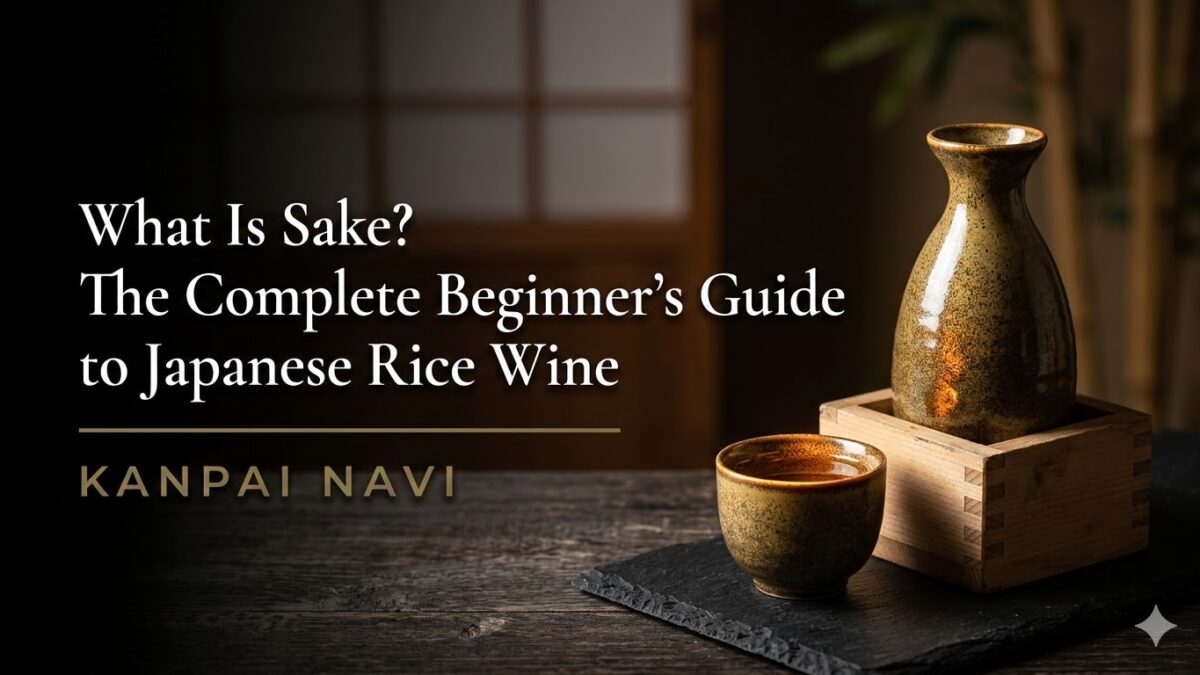
What Is Sake? The Complete Beginner’s Guide to Japanese Rice Wine
What You’ll Learn in This Article
- What sake actually is — and why it belongs in its own category, separate from wine and beer
- How four simple ingredients and a 1,000-year-old fermentation technique create one of the world’s most complex drinks
- Every sake grade explained — from everyday futsushu to ultra-premium junmai daiginjo
- How to drink sake the right way — temperature, glassware, food pairing, and etiquette
- The cultural significance of sake in Japan and its growing global recognition
Sake is one of the most misunderstood drinks in the world. Walk into any bar outside Japan and you will hear it called “rice wine,” served as a shot, or dismissed as something you only drink warm with sushi. None of that is quite right. Sake is a fermented rice beverage with a brewing process unlike anything in the wine or beer world — and once you understand the basics, it opens up one of the most diverse and rewarding drinking categories on the planet.
Supervised by
Daichi Takemoto
Authentic Bartender & Owner of Obanzai Nanchatte, Kobe
With 8 years of experience as a professional bartender and now the owner of "Obanzai Nanchatte" in Kobe, Daichi brings hands-on expertise in Japanese sake, whisky, and food pairing to every article on Kanpai Navi.
Table of Contents
- What Is Sake, Exactly?
- Why Sake Is Neither Wine Nor Beer
- Alcohol Content: Why Sake Is Stronger Than You Think
- UNESCO Recognition: A Turning Point for Sake
- How Sake Is Made: Four Ingredients, One Extraordinary Process
- The Four Ingredients
- Rice Polishing: The Foundation of Sake Quality
- Multiple Parallel Fermentation: Why Sake Is Unique
- The Brewing Process Step by Step
- Sake Grades at a Glance
- The Junmai vs. Non-Junmai Split
- Special Sake Categories Beyond the Grade System
- What Does Sake Taste Like?
- Flavor Profiles by Grade
- The Five Dimensions of Sake Flavor
- How to Drink Sake
- Temperature: The Most Powerful Variable
- Glassware: Matching the Vessel to the Style
- Food Pairing: Sake’s Greatest Strength
- Sake Culture and History
- A Brief History
- Sake in Japanese Life
- The Sake Industry Today
- How to Start Your Sake Journey
- Step 1: Try Three Foundational Styles
- Step 2: Experiment with Temperature
- Step 3: Pair with Food
- Frequently Asked Questions
- Is sake a wine or a beer?
- How strong is sake?
- Should sake be served hot or cold?
- What is the best sake for beginners?
- Does sake go bad after opening?
- What does “junmai” mean on a sake label?
- Is sake gluten-free?
- How should I store sake?
- The Bottom Line
- Sources and References
What Is Sake, Exactly?
Sake is an alcoholic beverage made from fermented polished rice. In Japan, it is called nihonshu (日本酒), which literally means “Japanese alcohol.” The word “sake” in Japanese actually refers to alcohol in general — but outside Japan, it has become the universal term for this specific drink.
For a deeper look at how sake is formally classified, see our guide to the definition of sake.
Why Sake Is Neither Wine Nor Beer
Despite being commonly called rice wine, sake is technically neither wine nor beer — it occupies a completely unique category in the beverage world. Understanding why requires a quick look at how each drink is made.
Wine is made by fermenting fruit sugars that already exist in grapes. Beer is made by converting grain starch to sugar in one step (mashing), then fermenting that sugar in a separate step. Sake does something remarkable: it converts rice starch to sugar and ferments that sugar into alcohol at the same time, in the same tank.
This process — called multiple parallel fermentation — exists nowhere else in the beverage world. It is the single most important concept for understanding what makes sake unique, and we will explore it in detail below.
| Detail | Information |
|---|---|
| What it is | An alcoholic beverage made from fermented polished rice |
| Japanese name | Nihonshu (日本酒) — literally “Japanese alcohol” |
| Core ingredients | Rice, water, koji mold (Aspergillus oryzae), yeast |
| Typical ABV | 15–16% (full range: 13–20%) |
| Category | Neither wine nor beer — unique fermentation category |
| Fermentation method | Multiple parallel fermentation (saccharification + fermentation simultaneously) |
| History | Rice-based alcohol in Japan for over 1,000 years; modern brewing methods since the Edo period |
| UNESCO status | Traditional sake-making with koji mold recognized as Intangible Cultural Heritage (December 2024) |
| Number of breweries | Approximately 1,400 active breweries (kura) in Japan today |
Alcohol Content: Why Sake Is Stronger Than You Think
That alcohol content of 15–20% is worth noting. Sake is higher in alcohol than most wines (typically 12–15%) and significantly stronger than beer (4–6%). The reason traces directly back to multiple parallel fermentation — because starch conversion and fermentation happen simultaneously, the yeast can work longer and more efficiently, naturally achieving a higher ABV than either wine or beer.
Some modern sake styles, particularly sparkling sake and low-alcohol varieties, come in at 5–13% ABV. At the other end, undiluted sake (genshu) can reach 18–20%. But the vast majority of sake you will encounter sits in the 15–16% range.
| Beverage | Typical ABV Range | How It Compares |
|---|---|---|
| Beer | 4–6% | Sake is roughly 3x stronger |
| Wine | 12–15% | Sake is slightly stronger on average |
| Sake | 15–16% (standard) | — |
| Sake (genshu) | 17–20% | Comparable to fortified wine |
| Shochu | 25–35% | A distilled spirit — different category entirely |
Daichi Takemoto
The “sake is strong” reputation actually comes from a common mistake: people drink it like beer. A 300ml glass of sake at 16% ABV contains more alcohol than a pint of lager. Once you think of sake as being in the same alcohol range as wine, the serving sizes make much more sense — small pours, sipped slowly, ideally with food.
UNESCO Recognition: A Turning Point for Sake
In December 2024, UNESCO recognized traditional sake-making with koji mold as an Intangible Cultural Heritage of Humanity. The designation highlights not just the drink itself, but the centuries-old craft of cultivating koji — the mold (Aspergillus oryzae) that makes sake possible.
This recognition places sake alongside other culturally significant traditions like French gastronomy and Belgian beer culture. It is a powerful acknowledgment that sake is more than a beverage — it is a living tradition shaped by generations of Japanese craftsmen and craftswomen.
How Sake Is Made: Four Ingredients, One Extraordinary Process
If you want to understand sake, you need to understand its four ingredients and one extraordinary fermentation process. For the full production breakdown, see our detailed guide on what sake is made of. Here is the overview that every sake drinker should know.
The Four Ingredients
Every sake in the world starts with the same four ingredients — nothing more, nothing less. The simplicity of the ingredient list makes the diversity of the finished product all the more remarkable.
| Ingredient | Role | Key Details |
|---|---|---|
| Rice (kome) | The starch source | Sake rice (sakamai) varieties like Yamada Nishiki have larger, starchier grain cores. The rice is polished before brewing — how much is removed determines the grade. |
| Water (mizu) | The body of the drink | Makes up roughly 80% of the finished product. Mineral content shapes the flavor: soft water (nansui) produces delicate sake; hard water (kousui) produces bolder styles. |
| Koji mold (Aspergillus oryzae) | Starch-to-sugar converter | Sprinkled onto steamed rice and cultivated for ~48 hours. Produces enzymes that break rice starch into glucose. Without koji, there is no sake. |
| Yeast (kobo) | Sugar-to-alcohol converter | Converts glucose into alcohol and CO₂. Different yeast strains produce different aromatic profiles — from banana-like esters to apple and melon notes. |
Rice Polishing: The Foundation of Sake Quality
Before brewing begins, the rice must be polished (milled) to remove the outer layers of each grain. The outer portion of a rice grain contains proteins, fats, and minerals that can produce off-flavors during fermentation. By milling away these layers, brewers expose the pure starch core — resulting in cleaner, more refined sake.
The polishing ratio (seimaibuai) tells you what percentage of the original grain remains after milling. A polishing ratio of 60% means 40% of the grain was removed. The lower the polishing ratio number, the more rice was removed and the more premium the sake is considered.
| Polishing Ratio | Rice Removed | Grade Level | Typical Character |
|---|---|---|---|
| 50% or less | 50%+ removed | Daiginjo / Junmai Daiginjo | Ultra-refined, delicate, floral |
| 51–60% | 40–49% removed | Ginjo / Junmai Ginjo | Aromatic, fruity, balanced |
| 61–70% | 30–39% removed | Honjozo / Tokubetsu Junmai | Clean, moderate complexity |
| 71% or more | Less than 30% removed | Futsushu (table sake) | Full-bodied, straightforward |
Multiple Parallel Fermentation: Why Sake Is Unique
This is the concept that separates sake from every other alcoholic drink on earth. Understanding it is the key to understanding everything about sake.
In beer brewing, starch conversion and fermentation are two separate, sequential stages. The brewer first converts barley starch into sugar (mashing), then adds yeast to ferment that sugar into alcohol. In winemaking, there is no starch conversion at all — grapes already contain sugar, so fermentation begins directly.
In sake, koji mold breaks rice starch into sugar while yeast simultaneously converts that sugar into alcohol — both reactions happening in the same vessel, at the same time. This is called multiple parallel fermentation, and it is the reason sake naturally achieves a higher ABV than wine.
| Beverage | Sugar Source | Fermentation Type | Typical ABV |
|---|---|---|---|
| Wine | Grape sugar (already present) | Simple fermentation | 12–15% |
| Beer | Grain starch → sugar (separate step) | Sequential fermentation | 4–6% |
| Sake | Rice starch → sugar (simultaneous with fermentation) | Multiple parallel fermentation | 15–20% |
Daichi Takemoto
Multiple parallel fermentation is the single most important concept in sake. Once you understand that koji and yeast are working side by side in the same tank — one creating sugar, the other consuming it — everything else about sake starts to make sense. It is an elegant, almost miraculous process that evolved over centuries of Japanese craftsmanship.
The Brewing Process Step by Step
While a full explanation belongs in our guide on sake ingredients and production, here is a simplified overview of the key stages every bottle of sake passes through.
The entire brewing process takes roughly 30 to 45 days from the start of fermentation, though total production time including preparation and aging can stretch to several months.
- Rice polishing (seimai) — Outer layers of rice grains are milled away to the desired polishing ratio.
- Washing and soaking (senmai / shinseki) — Polished rice is washed to remove residual bran, then soaked to absorb a precisely controlled amount of water.
- Steaming (mushimai) — Rice is steamed (not boiled) to gelatinize the starch, making it accessible to koji enzymes.
- Koji-making (seikiku) — Koji mold spores are sprinkled onto a portion of the steamed rice and cultivated in a warm, humid room (koji-muro) for approximately 48 hours.
- Yeast starter (shubo / moto) — A concentrated mixture of koji rice, steamed rice, water, and yeast is prepared. This builds a strong yeast population before the main fermentation.
- Main fermentation (moromi) — More steamed rice, koji rice, and water are added in three stages over four days (sandan-jikomi). Fermentation then proceeds for 18 to 32 days.
- Pressing (joso) — The fermented mash is pressed to separate the clear sake from the rice solids (sake kasu).
- Filtration, pasteurization, and aging — Most sake is filtered, pasteurized twice, and aged for several months before bottling.
A Common Misconception About Brewing Alcohol
Sake’s higher ABV does not mean it is a spirit. Sake is never distilled. Every drop of alcohol in a bottle of sake was produced naturally by yeast during fermentation. This is fundamentally different from spirits like shochu, vodka, or whisky, where distillation concentrates the alcohol. At 15–16% ABV, sake belongs in the same conversation as wine — not hard liquor.Sake Grades at a Glance
Sake quality is largely determined by the polishing ratio (seimaibuai) — the percentage of the rice grain remaining after the outer layers are milled away. More polishing removes proteins and fats from the grain’s surface, producing cleaner, more delicate flavors. Less polishing leaves more of the grain intact, resulting in fuller, earthier sake.
For a complete breakdown of every style, see our guide to sake types explained. The table below is your definitive quick reference.
| Grade | Polishing Ratio | Added Alcohol? | Flavor Profile | Price Range |
|---|---|---|---|---|
| Junmai Daiginjo | 50% or less remaining | No | Most refined — floral, fruity, delicate | $$$$ |
| Daiginjo | 50% or less remaining | Yes (small amount) | Light, aromatic, elegant | $$$–$$$$ |
| Junmai Ginjo | 60% or less remaining | No | Fruity, balanced, aromatic | $$–$$$ |
| Ginjo | 60% or less remaining | Yes (small amount) | Fragrant, smooth, lighter body | $$–$$$ |
| Tokubetsu Junmai | 60% or less, or special method | No | Rich with added refinement | $$ |
| Tokubetsu Honjozo | 60% or less, or special method | Yes (small amount) | Clean, nuanced, versatile | $$ |
| Junmai | No minimum requirement | No | Rich, full-bodied, rice-forward | $–$$ |
| Honjozo | 70% or less remaining | Yes (small amount) | Clean, light, versatile | $–$$ |
| Futsushu | No requirement | Yes (larger amount) | Everyday table sake | $ |
The Junmai vs. Non-Junmai Split
The grades split into two main families. The junmai family (junmai, junmai ginjo, junmai daiginjo) uses only the four core ingredients — no added alcohol. The word “junmai” literally means “pure rice.”
The non-junmai family (honjozo, ginjo, daiginjo) adds a small amount of distilled alcohol during brewing. This added alcohol is not a shortcut or a flaw — it is a deliberate technique used by skilled brewers to lighten the body and lift aromatic compounds. Some of Japan’s most award-winning sake contains added alcohol.
Futsushu (table sake) accounts for roughly 70% of all sake produced in Japan. It sits below all premium grades, has no polishing ratio requirement, and may contain larger amounts of added alcohol and other additives. It is the sake most Japanese people drink daily — affordable, straightforward, and best enjoyed warm or at room temperature.
Special Sake Categories Beyond the Grade System
Beyond the standard grades, several special categories are worth knowing. These are not grades but rather production methods or styles that can apply across multiple grades.
| Category | What Makes It Special | Key Characteristics |
|---|---|---|
| Namazake | Unpasteurized (skip one or both pasteurizations) | Fresh, lively, must be refrigerated |
| Genshu | Undiluted (no water added after fermentation) | Higher ABV (17–20%), bolder, more concentrated |
| Nigori | Coarsely filtered, leaving rice sediment | Cloudy, creamy, slightly sweet |
| Sparkling | Carbonated — natural or injected | Light, effervescent, low alcohol (5–12%) |
| Koshu (aged) | Aged for years, sometimes decades | Amber color, caramel, nuts, deep umami |
| Kimoto / Yamahai | Traditional yeast starter methods | Richer, more complex, gamey, lactic notes |
What Does Sake Taste Like?
Sake’s flavor range is broader than most people expect. Depending on the grade, brewing method, and serving temperature, sake can taste fruity and floral, rich and savory, light and crisp, or deep and earthy. Common tasting notes include melon, pear, banana, rice, mushroom, cream, and minerals.
For a deeper exploration of sake’s flavor spectrum, see our guide to what sake tastes like.
Flavor Profiles by Grade
The two biggest factors shaping flavor are the polishing ratio and the presence or absence of added alcohol. More polishing tends to produce lighter, more fruity and floral sake. Less polishing yields fuller body, more umami, and earthier notes.
| Grade | Aroma | Body | Common Tasting Notes | Food Pairing Style |
|---|---|---|---|---|
| Junmai Daiginjo | Intense, floral | Light to medium | Melon, white peach, jasmine, lychee | Light seafood, sashimi, delicate appetizers |
| Junmai Ginjo | Moderate, fruity | Medium | Apple, pear, banana, white grape | Sushi, grilled fish, salads, light pasta |
| Junmai | Subtle, rice-forward | Medium to full | Rice, cereal, umami, cream, mushroom | Grilled meats, stews, fried foods, cheese |
| Honjozo | Light, clean | Light to medium | Mild fruit, grain, clean finish | Versatile — works with most Japanese dishes |
| Futsushu | Minimal | Light to medium | Grain, mild sweetness, straightforward | Izakaya fare, yakitori, everyday meals |
The Five Dimensions of Sake Flavor
Sake professionals evaluate flavor across five core dimensions. Understanding these helps you describe what you are tasting and find sake that matches your preferences.
- Sweetness (amakuchi) vs. Dryness (karakuchi) — Measured informally by the Sake Meter Value (SMV/nihonshudo). Positive numbers indicate drier sake; negative numbers indicate sweeter.
- Acidity (sanmi) — Higher acidity creates a sharper, more defined mouthfeel. Lower acidity feels softer and rounder.
- Umami — The savory, almost brothy quality. Stronger in junmai styles and sake made with less polishing.
- Aroma (kaori) — Ranges from subtle and rice-forward to intensely fruity and floral, depending on yeast strain and polishing ratio.
- Body / Texture (koku) — The weight and richness on the palate. Ranges from light and water-like to full and creamy.
Daichi Takemoto
People often ask me “what does sake taste like?” and I tell them: it depends entirely on which sake. The range from a chilled junmai daiginjo to a warmed aged koshu is as wide as the range from Champagne to a full-bodied Barolo. That diversity is what makes sake so exciting — and so hard to summarize in a single sentence. My advice: try five completely different styles in one sitting, and you will never again think of sake as one flavor.
How to Drink Sake
One of sake’s greatest strengths is its versatility. No other beverage pairs as naturally with such a wide temperature range and variety of serving styles. For the complete guide, see how to drink sake.
Temperature: The Most Powerful Variable
Sake can be served cold, at room temperature, or warm — and the best temperature depends on the style. Temperature changes sake’s flavor more dramatically than it does for almost any other beverage. The same bottle can taste like two completely different drinks depending on whether you serve it at 5°C or 50°C.
| Japanese Term | Temperature | Range | Best For |
|---|---|---|---|
| Yukibie (snow-cold) | Ice-cold | 5°C | Light sparkling sake, namazake |
| Hanabie (flower-cold) | Well chilled | 10°C | Daiginjo, junmai daiginjo |
| Suzubie (cool) | Lightly chilled | 15°C | Ginjo, junmai ginjo |
| Hiya (room temp) | Room temperature | 20°C | Junmai, tokubetsu junmai |
| Hinatakan (sunshine warm) | Slightly warm | 30°C | Junmai, honjozo — subtle warming |
| Nurukan (lukewarm) | Warm | 40°C | Junmai, honjozo — umami emerges |
| Joukan (pleasantly warm) | Comfortably warm | 45°C | Honjozo, robust junmai — classic hot sake |
| Atsukan (hot) | Hot | 50°C | Futsushu, robust junmai — bold and warming |
| Tobikirikan (piping hot) | Very hot | 55°C+ | Full-bodied futsushu in cold weather |
Premium sake — especially ginjo and daiginjo grades — is typically served chilled to preserve its delicate aromatics. Robust styles like junmai and honjozo are excellent candidates for warm sake (atsukan), where heating rounds out the body and brings forward umami and rice-forward flavors.
Glassware: Matching the Vessel to the Style
Traditional Japanese sake ware includes the ochoko (small ceramic cup), guinomi (larger cup), sakazuki (flat ceremonial cup), and masu (wooden box). For aromatic premium sake, a wine glass works surprisingly well — the bowl concentrates fragrances at the rim.
There is no single correct glass for sake. Match the vessel to the style: ceramic cups for warm sake, wine glasses for chilled daiginjo, and whatever feels right for casual drinking. The best sake glass is the one that makes you enjoy the moment.
Food Pairing: Sake’s Greatest Strength
Sake is one of the most food-friendly beverages ever created. Its combination of umami, mild acidity, and relatively neutral base flavor allows it to complement an enormous range of cuisines — not just Japanese food.
The key principle of sake food pairing is matching the weight of the sake to the weight of the dish. Light, aromatic sake with delicate food. Rich, full-bodied sake with hearty dishes.
- Sashimi and raw seafood — Junmai ginjo or daiginjo. The clean, fruity profile complements without overpowering.
- Grilled fish and yakitori — Junmai or honjozo, served warm. The umami in the sake echoes the charred, savory flavors.
- Fried foods (tempura, karaage) — Honjozo or sparkling sake. The crisp finish cuts through oil.
- Cheese — Aged koshu or rich junmai. Umami meets umami in a remarkable pairing.
- Spicy food — Off-dry (slightly sweet) junmai ginjo. The sweetness tames the heat.
Sake Culture and History
Sake is far more than a drink in Japan — it is woven into the fabric of religious ceremonies, seasonal celebrations, and daily life. Understanding even a little of this cultural context deepens the experience of drinking it.
A Brief History
The origins of sake are debated, but rice-based fermented beverages have existed in Japan for well over 1,000 years. The earliest references appear in texts from the Nara period (710–794 CE), when sake was brewed at imperial courts and Shinto shrines.
The brewing techniques we recognize today — including the use of koji mold and polished rice — were refined primarily during the Edo period (1603–1868). This era saw the rise of commercial brewing in regions like Nada (modern-day Kobe) and Fushimi (Kyoto), which remain Japan’s most important sake-producing areas.
The 20th century brought mechanization, refrigerated distribution, and the development of the modern grading system. The 21st century has seen a global explosion of interest in premium sake, driven by Japanese cuisine’s worldwide popularity and an increasing number of sake sommeliers working outside Japan.
Sake in Japanese Life
Sake appears at nearly every significant moment in Japanese culture:
- Shinto ceremonies — Sake (called omiki when offered to the gods) is present at shrine dedications, harvest festivals, and purification rituals.
- Weddings — The san-san-kudo ceremony involves the bride and groom exchanging three sips of sake from three cups of increasing size.
- New Year (Oshogatsu) — Otoso, a spiced sake, is drunk to wish for health in the coming year.
- Business and social life — Sharing sake is a ritual of bonding. The custom of pouring for others (rather than yourself) is central to Japanese drinking etiquette.
The Sake Industry Today
Japan’s sake industry has faced significant challenges in recent decades. Domestic sake consumption has been declining since the mid-1970s, as younger Japanese drinkers turn to beer, wine, and cocktails. The number of active breweries has fallen from over 4,000 in the mid-20th century to approximately 1,400 today.
However, two powerful counter-trends are reshaping the industry. First, sake exports have hit record highs for over a decade running, with the United States, China, and Hong Kong as the top markets. Second, the premium sake segment is growing even as total volume declines — consumers are drinking less sake, but better sake.
How to Start Your Sake Journey
If you are new to sake, the sheer variety can feel overwhelming. Here is a practical starting path that I recommend to anyone beginning their exploration.
Step 1: Try Three Foundational Styles
Start with one bottle each of these three styles. They represent the core range of sake flavors:
- Junmai — Serve at room temperature or slightly warm. This shows sake’s rice-forward, umami-rich character.
- Junmai Ginjo — Serve chilled. This reveals sake’s fruity, aromatic side.
- Junmai Daiginjo — Serve well chilled. This showcases the pinnacle of refinement and delicacy.
Step 2: Experiment with Temperature
Take a bottle of junmai and try it at three different temperatures in one sitting: chilled (from the fridge), room temperature, and warm (heated in a hot water bath to about 45°C). Experiencing the same sake at different temperatures is the single fastest way to understand how dramatically serving conditions affect flavor.
Step 3: Pair with Food
Sake truly comes alive alongside food. Start by pairing your junmai ginjo with sushi or sashimi, and your warm junmai with grilled meats or fried dishes. Pay attention to how the sake interacts with different flavors — you will quickly develop an intuition for what works.
Frequently Asked Questions
Is sake a wine or a beer?
Neither. Sake is made from grain (like beer) but achieves a higher ABV through a unique process called multiple parallel fermentation (unlike both beer and wine). It occupies its own category. The term “rice wine” is a convenient shorthand, but it is technically inaccurate.
How strong is sake?
Most sake has an alcohol content of 15–16% ABV, though the full range spans 5–20%. This makes it stronger than most wines and significantly stronger than beer. The high ABV is a natural result of sake’s multiple parallel fermentation process — sake is never distilled.
Should sake be served hot or cold?
Both — it depends on the style. Premium aromatic sake (ginjo, daiginjo) is best served chilled. Fuller-bodied styles (junmai, honjozo) are excellent served warm. The idea that all sake should be served hot is a common misconception. See our guide on how to drink sake for details.
What is the best sake for beginners?
A junmai or junmai ginjo is the ideal starting point. Both are made with pure ingredients (no added alcohol), and junmai ginjo offers enough fruity aroma to be immediately appealing while still showing sake’s core character. Look for well-known brands at your local shop and serve it chilled.
Does sake go bad after opening?
Sake does not spoil in a way that makes it unsafe to drink, but it does lose freshness after opening. For the best flavor, consume opened sake within one to two weeks and keep it refrigerated. Unpasteurized sake (namazake) is more fragile and should be finished within a few days of opening.
What does “junmai” mean on a sake label?
Junmai (純米) literally means “pure rice.” It indicates that the sake was made with only rice, water, koji, and yeast — no added distilled alcohol. Junmai sake tends to be richer and more full-bodied than non-junmai styles.
Is sake gluten-free?
Yes. Sake is made from rice, which contains no gluten. The fermentation process does not introduce any gluten-containing ingredients. Sake is naturally gluten-free and safe for people with celiac disease or gluten sensitivity.
How should I store sake?
Store sake upright in a cool, dark place. Unpasteurized sake (namazake) must be refrigerated at all times. Pasteurized sake is more stable but still benefits from refrigeration, especially once opened. Avoid exposure to direct sunlight and temperature fluctuations, which degrade quality.
The Bottom Line
Sake is a fermented rice beverage with a history stretching over a millennium, a UNESCO-recognized brewing tradition, and a flavor range that rivals any drink on earth. It is made from just four ingredients — rice, water, koji mold, and yeast — yet produces an extraordinary diversity of styles, from light and floral to rich and savory.
Understanding sake starts with three essentials: the four ingredients and how they work together, the grading system based on polishing ratio, and the fact that temperature and glassware can transform the same bottle into a completely different experience.
Master those three concepts and you have the foundation for a lifetime of exploration. The more you taste, the more you discover — and with over 1,400 breweries in Japan alone, there is always something new to try.
Sources and References
- UNESCO — Traditional sake-making in Japan using koji mold: Intangible Cultural Heritage
- Japan Sake and Shochu Makers Association (日本酒造組合中央会) — Official industry body providing production statistics, grading standards, and export data


