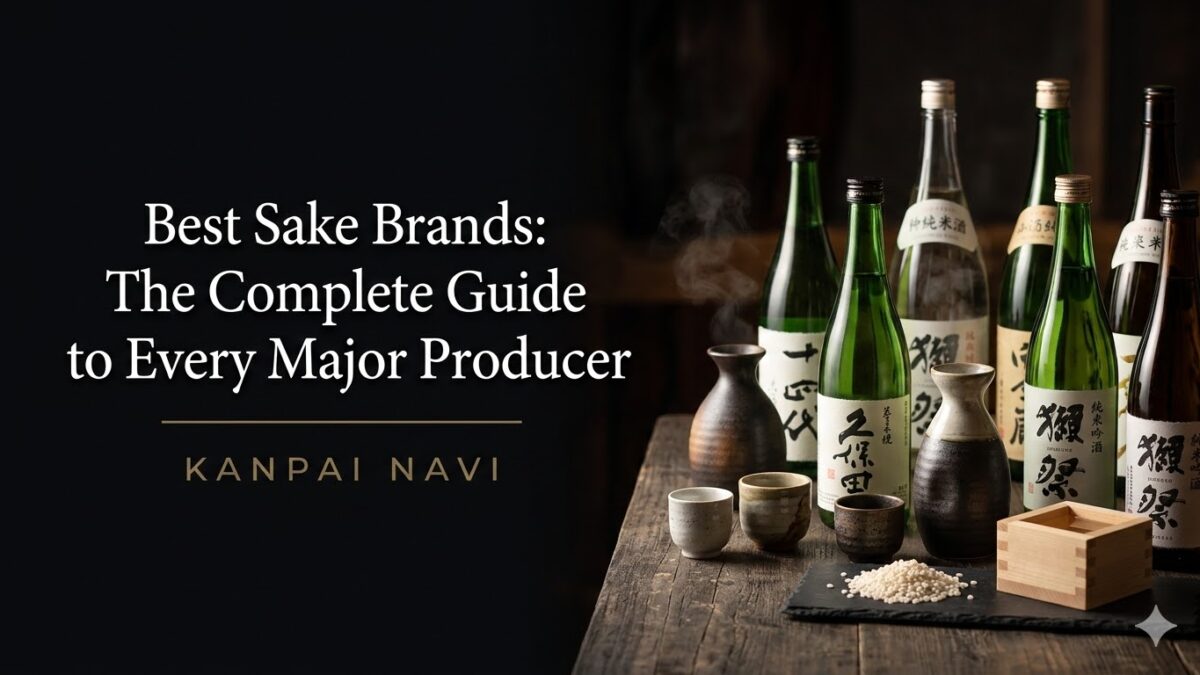
Best Sake Brands: The Complete Guide to Every Major Producer
What You’ll Learn in This Article
- How we evaluated sake brands — the criteria that separate great breweries from average ones
- The 15 best sake brands ranked — from everyday essentials to premium collectors’ picks
- Japanese sake regions explained — how geography shapes each brand’s character
- How to choose the right brand for you — based on your taste preferences and budget
With over 1,400 active sake breweries in Japan, choosing a brand can feel overwhelming — especially when you’re standing in a store staring at rows of bottles with Japanese labels you can’t read. The good news: you don’t need to know all 1,400 breweries. A focused understanding of the top brands gives you enough knowledge to confidently buy sake in any store, restaurant, or online shop.
This guide covers the best sake brands available internationally — from mass-market giants that have introduced millions of people to sake, to craft producers making some of the most extraordinary rice wine on earth. We’ve evaluated each brand on quality, availability, value, range, and consistency.
Supervised by
Daichi Takemoto
Authentic Bartender & Owner of Obanzai Nanchatte, Kobe
With 8 years of experience as a professional bartender and now the owner of "Obanzai Nanchatte" in Kobe, Daichi brings hands-on expertise in Japanese sake, whisky, and food pairing to every article on Kanpai Navi.
Table of Contents
- How We Chose the Best Sake Brands
- The 15 Best Sake Brands
- 1. Dassai (獺祭) — Asahi Shuzo, Yamaguchi
- 2. Kubota (久保田) — Asahi Shuzo, Niigata
- 3. Hakkaisan (八海山) — Hakkaisan Brewery, Niigata
- 4. Gekkeikan (月桂冠) — Gekkeikan, Kyoto
- 5. Tedorigawa (手取川) — Yoshida Brewery, Ishikawa
- 6. Ozeki (大関) — Ozeki Corporation, Hyogo
- 7. Nanbu Bijin (南部美人) — Nanbu Bijin, Iwate
- 8. Sho Chiku Bai (松竹梅) — Takara Shuzo, Kyoto
- 9. Juyondai (十四代) — Takagi Shuzo, Yamagata
- 10. Dewazakura (出羽桜) — Dewazakura Brewery, Yamagata
- 11. Hakutsuru (白鶴) — Hakutsuru Sake Brewing, Hyogo
- 12. Masumi (真澄) — Miyasaka Brewing, Nagano
- 13. Born (梵) — Katoukichibee Shouten, Fukui
- 14. Isojiman (磯自慢) — Isojiman Brewery, Shizuoka
- 15. Suigei (酔鯨) — Suigei Brewing, Kochi
- Sake Regions: How Geography Shapes Brands
- How to Choose the Right Brand for You
- Frequently Asked Questions
- What is the best sake brand for beginners?
- What is the most popular sake brand in Japan?
- Is expensive sake better than cheap sake?
- Should I buy sake from Japan or from US-based breweries?
- The Bottom Line
How We Chose the Best Sake Brands
Not every famous sake brand is a great sake brand, and not every great brewery is famous. We evaluated brands on five criteria:
- Quality consistency — Does every bottle from this brand meet a high standard, or is quality uneven across their lineup?
- International availability — Can you actually find this brand outside Japan? A brilliant brewery with zero exports doesn’t help international readers.
- Value — Does the quality justify the price? A $100 bottle needs to deliver a $100 experience.
- Range — Does the brand offer options across styles and price points, or is it a one-product brand?
- Reputation — What do Japanese sake professionals, sommeliers, and serious drinkers think of this brand?
The 15 Best Sake Brands
1. Dassai (獺祭) — Asahi Shuzo, Yamaguchi
| Style | Exclusively junmai daiginjo |
| Price range | $25-200+ |
| Availability | Excellent worldwide |
Dassai is the most recognized Japanese sake brand in the world — and for good reason. Their decision to produce only junmai daiginjo (the highest grade) makes a bold statement: every bottle is premium. The core lineup — Dassai 45, Dassai 23, and Dassai Beyond — covers a range from accessible luxury to transcendent.
Best bottle to try first: Dassai 45 ($25-35 for 720ml). Fruity, elegant, and the definitive introduction to the brand.
Who it’s for: Wine lovers transitioning to sake, special occasion drinkers, anyone who wants guaranteed premium quality.
2. Kubota (久保田) — Asahi Shuzo, Niigata
| Style | Tanrei karakuchi (light and dry) |
| Price range | $25-80 |
| Availability | Very good |
Kubota defined the light-and-dry sake style that dominated Japan for decades. Their lineup from Senju (everyday honjozo) to Manju (ethereal junmai daiginjo) showcases remarkable consistency and refinement. Kubota is the thinking drinker’s sake — subtle, precise, and endlessly food-friendly.
Best bottle to try first: Kubota Senju ($25-35 for 720ml). Clean, dry, versatile at any temperature.
Who it’s for: Food pairing enthusiasts, dry sake lovers, everyday premium drinking.
3. Hakkaisan (八海山) — Hakkaisan Brewery, Niigata
| Style | Clean, refined, Niigata-style |
| Price range | $15-60 |
| Availability | Very good |
Hakkaisan is one of Niigata’s “big three” sake brands and represents the pinnacle of clean, balanced brewing. Named after Mount Hakkai (one of Japan’s sacred peaks), the brand is known for crystalline purity and a minerality that comes from the mountain snow-melt water used in brewing.
Best bottle to try first: Hakkaisan Tokubetsu Honjozo ($22-30 for 720ml). A benchmark for clean, dry sake.
Who it’s for: Anyone who values precision and purity. Excellent for daily drinking.
4. Gekkeikan (月桂冠) — Gekkeikan, Kyoto
| Style | Approachable, versatile |
| Price range | $8-25 |
| Availability | Excellent (most widely available sake in the US) |
Gekkeikan is the world’s most widely distributed sake brand, with breweries in both Fushimi (Kyoto) and Folsom (California). While it’s often dismissed as “supermarket sake,” Gekkeikan’s quality-to-price ratio is genuinely excellent — especially their junmai and traditional lines.
Best bottle to try first: Gekkeikan Traditional ($8-12 for 750ml). Clean, reliable, incredible value.
Who it’s for: Beginners, budget-conscious drinkers, cooking.
5. Tedorigawa (手取川) — Yoshida Brewery, Ishikawa
| Style | Rich, full-bodied junmai |
| Price range | $18-50 |
| Availability | Good |
Named after the Tedori River in Ishikawa prefecture, this brewery produces some of the most satisfying junmai sake available. Tedorigawa is known for rice-forward richness, excellent umami depth, and outstanding warm-sake performance.
Best bottle to try first: Tedorigawa Junmai ($18-25 for 720ml). Rich, full, incredible warm.
Who it’s for: Junmai purists, warm sake enthusiasts, umami lovers.
6. Ozeki (大関) — Ozeki Corporation, Hyogo
| Style | Traditional Nada style |
| Price range | $7-20 |
| Availability | Excellent |
Ozeki is one of the great Nada breweries, producing sake with the region’s famous miyamizu hard water since 1711. Their One Cup Ozeki (the iconic cup sake) is a cultural institution. Beyond the everyday products, their premium junmai and Karatamba (dry sake) lines offer exceptional value.
Best bottle to try first: Ozeki Karatamba ($12-18 for 720ml). Sharp, clean, quintessential dry sake.
Who it’s for: Value seekers, dry sake fans, anyone wanting to explore the Nada style.
7. Nanbu Bijin (南部美人) — Nanbu Bijin, Iwate
| Style | Soft, balanced, elegant |
| Price range | $18-50 |
| Availability | Good |
“Southern Beauty” is one of the most decorated sake brands in international competitions, consistently winning gold medals at IWC (International Wine Challenge) and other prestigious events. Nanbu Bijin’s sake is characterized by softness, balance, and a gentle elegance that appeals to both beginners and experts.
Best bottle to try first: Nanbu Bijin Tokubetsu Junmai ($20-28 for 720ml). Soft, balanced, universally appealing.
Who it’s for: Competition sake fans, those who prefer gentle over bold.
8. Sho Chiku Bai (松竹梅) — Takara Shuzo, Kyoto
| Style | Approachable, diverse range |
| Price range | $7-15 |
| Availability | Excellent |
Sho Chiku Bai (Pine, Bamboo, Plum — symbols of good fortune) is Takara Shuzo’s sake brand, brewed in both Fushimi (Kyoto) and Berkeley (California). Known for clean, accessible sake at remarkable prices. Their nigori (cloudy sake) is one of the best introductions to the style.
Best bottle to try first: Sho Chiku Bai Classic Junmai ($7-10 for 750ml). Clean, neutral, versatile.
Who it’s for: Budget drinkers, cooking, everyday consumption.
9. Juyondai (十四代) — Takagi Shuzo, Yamagata
| Style | Fruity, aromatic, revolutionary |
| Price range | $60-500+ (when available) |
| Availability | Very limited |
Juyondai is Japan’s most sought-after sake brand — bottles sell out instantly and command massive premiums on the secondary market. The brand almost single-handedly created the modern fruity sake style (genshu-style aromas of tropical fruit, melon, and flowers). Juyondai’s influence on contemporary sake is immeasurable.
Best bottle to try first: Whatever you can find. Seriously — any Juyondai is worth trying if you encounter it.
Who it’s for: Collectors, serious enthusiasts willing to hunt for rare bottles.
10. Dewazakura (出羽桜) — Dewazakura Brewery, Yamagata
| Style | Aromatic, ginjo-focused |
| Price range | $20-50 |
| Availability | Good |
Dewazakura played a pivotal role in the “ginjo boom” of the 1980s — the movement that introduced aromatic, premium sake to mainstream Japanese drinkers. Their Oka Ginjo (Cherry Bouquet) is one of the most famous ginjo sakes ever produced and remains an outstanding introduction to the style.
Best bottle to try first: Dewazakura Oka Ginjo ($22-30 for 720ml). Floral, fruity, beautifully balanced.
Who it’s for: Ginjo lovers, aromatic sake fans, cherry blossom season drinking.
11. Hakutsuru (白鶴) — Hakutsuru Sake Brewing, Hyogo
| Style | Traditional Nada, versatile |
| Price range | $8-30 |
| Availability | Excellent |
“White Crane” is one of the oldest and largest sake producers in Japan (founded 1743). Like Gekkeikan, Hakutsuru is often underestimated — but their premium junmai and daiginjo lines are genuinely impressive. Their Sayuri nigori is one of the best-selling nigori sakes worldwide.
Best bottle to try first: Hakutsuru Sayuri ($12-18 for 300ml). A beautiful, gently sweet nigori.
Who it’s for: Nigori fans, value seekers, traditional sake lovers.
12. Masumi (真澄) — Miyasaka Brewing, Nagano
| Style | Balanced, structured, refined |
| Price range | $20-60 |
| Availability | Good |
Masumi has deep historical significance — the famous No. 7 yeast (kyokai 7-go), still one of the most widely used sake yeasts in Japan, was isolated from Masumi’s brewery in 1946. Their sake has a distinctive balance and structure, with a clean acidity that makes it outstanding for food pairing.
Best bottle to try first: Masumi Okuden Kantsukuri Junmai ($20-28 for 720ml). Dry, balanced, food-perfect.
Who it’s for: Food pairing enthusiasts, dry sake lovers, history buffs.
13. Born (梵) — Katoukichibee Shouten, Fukui
| Style | Aged, complex, unique |
| Price range | $30-150 |
| Availability | Moderate |
Born (the Japanese name means “pure” or “sacred”) is famous for their aged sake — many of their products are aged for 2-5 years at sub-zero temperatures before release. This creates a richness, depth, and complexity that’s rare in the sake world. Born’s Gold and Dreams Come True labels are legendary.
Best bottle to try first: Born Gold Junmai Daiginjo ($40-60 for 720ml). Rich, layered, unforgettable.
Who it’s for: Adventurous drinkers, those who appreciate aged spirits, special occasions.
14. Isojiman (磯自慢) — Isojiman Brewery, Shizuoka
| Style | Precise, delicate, elegant |
| Price range | $25-80 |
| Availability | Limited |
Isojiman is a small-production brewery with an obsessive commitment to quality. Their sake is brewed with the soft water of Shizuoka and shows a delicacy and precision that’s remarkable. Less well-known internationally than Dassai or Kubota, but revered among Japanese sake professionals.
Best bottle to try first: Isojiman Junmai Ginjo ($30-40 for 720ml). Delicate, precise, rewarding.
Who it’s for: Experienced drinkers looking for hidden gems.
15. Suigei (酔鯨) — Suigei Brewing, Kochi
| Style | Bone-dry, sharp, food-pairing machine |
| Price range | $18-45 |
| Availability | Good |
“Drunken Whale” comes from Kochi — Japan’s driest sake region and the prefecture with the highest per-capita sake consumption. Suigei’s sake is unapologetically dry (karakuchi), with a sharpness and acidity that makes it one of the best food-pairing sakes available. Excellent with oily, rich, and grilled foods.
Best bottle to try first: Suigei Tokubetsu Junmai ($22-30 for 720ml). Crisp, dry, cuts through anything rich.
Who it’s for: Dry sake lovers, food pairing enthusiasts, those who find most sake too sweet.
Daichi Takemoto
If I could only stock five brands at my restaurant, they’d be: Kubota Senju (the everyday workhorse), Dassai 45 (for the premium request), Suigei Tokubetsu Junmai (for fish and grilled food), Hakutsuru Sayuri (for the “I don’t usually drink sake” customer), and Tedorigawa Junmai (for warming in winter). Those five cover virtually every customer and every situation. That’s the beauty of knowing your brands — you don’t need dozens of bottles. You need the right bottles.
Sake Regions: How Geography Shapes Brands
Japanese sake regions have distinct styles, much like wine regions. Understanding these styles helps you predict what a brand’s sake will taste like based on where it’s from.
| Region | Style | Key Brands | Water Character |
|---|---|---|---|
| Niigata | Light, dry, clean (tanrei karakuchi) | Kubota, Hakkaisan, Koshi no Kanbai | Soft snow-melt water |
| Hyogo (Nada) | Bold, structured, masculine (otokozake) | Ozeki, Hakutsuru, Kiku-Masamune | Hard mineral water (miyamizu) |
| Kyoto (Fushimi) | Soft, gentle, rounded (onnazake) | Gekkeikan, Sho Chiku Bai, Tamanohikari | Soft groundwater |
| Yamagata | Fruity, aromatic, elegant | Juyondai, Dewazakura, Gassan | Clean mountain water |
| Kochi | Very dry, sharp, food-focused | Suigei, Tosatsuru, Minami | Soft river water |
| Ishikawa | Rich, full-bodied, umami | Tedorigawa, Kikuhime, Tengumai | White Mountain water |
The two most important factors are water hardness and climate. Hard water (like Nada’s miyamizu) produces vigorous fermentation and bold sake. Soft water (like Fushimi’s or Niigata’s) produces gentle fermentation and delicate sake. Cold climates (Niigata, Yamagata) enable slow, controlled fermentation that creates clean, refined flavors.
How to Choose the Right Brand for You
If you like bold, full-bodied drinks: Start with Tedorigawa, Ozeki Karatamba, or Suigei. These are robust sakes with strong character.
If you like light, delicate drinks: Start with Kubota Senju, Hakkaisan, or Nanbu Bijin. These are refined and elegant.
If you like fruity, aromatic drinks: Start with Dassai 45, Dewazakura Oka, or Born Gold. These showcase ginjo aromatics.
If you like sweet drinks: Start with Hakutsuru Sayuri (nigori) or MIO Sparkling. These are approachable and gently sweet.
If you’re on a budget: Gekkeikan Traditional and Sho Chiku Bai Classic offer remarkable quality under $12.
If you want to impress: Dassai 23, Kubota Manju, or Born Gold are guaranteed conversation starters.
Frequently Asked Questions
What is the best sake brand for beginners?
For absolute beginners, Gekkeikan Traditional or Sho Chiku Bai Classic are affordable and approachable — perfect for discovering whether you prefer sake chilled, at room temperature, or warm. For beginners ready to invest slightly more, Dassai 45 or Nanbu Bijin Tokubetsu Junmai are reliably impressive first premium sakes.
What is the most popular sake brand in Japan?
By volume, Hakutsuru is the largest sake producer in Japan. By brand recognition among premium sake, Dassai and Kubota are the most well-known. The most sought-after (and hardest to buy) brand is Juyondai, which sells out instantly and commands huge secondary market premiums.
Is expensive sake better than cheap sake?
Not always. Price correlates with rice polishing ratio and production complexity — a daiginjo costs more because it requires more rice to produce. But “more polished” doesn’t always mean “better tasting” — it means different. A $12 Gekkeikan junmai served warm with grilled fish can be more satisfying than a $70 junmai daiginjo if the pairing is right. Buy based on the drinking occasion, not the price tag.
Should I buy sake from Japan or from US-based breweries?
Both can be excellent. US-based breweries (Gekkeikan USA, Sho Chiku Bai USA, Ozeki USA) produce fresh, affordable sake adapted for the American market. Japanese imports offer wider variety and more traditional regional styles. For everyday drinking, US-brewed sake is fine. For exploration and premium experiences, Japanese imports are typically more interesting.
The Bottom Line
You don’t need to memorize 1,400 brewery names to enjoy sake. Know five or six brands that match your taste preferences and you’ll be able to confidently order at any restaurant or shop in any bottle. Start with one brand from this list, try their core product, and let your palate guide you to the next exploration. The best sake brand isn’t the most expensive or the most famous — it’s the one that makes you reach for another glass.


