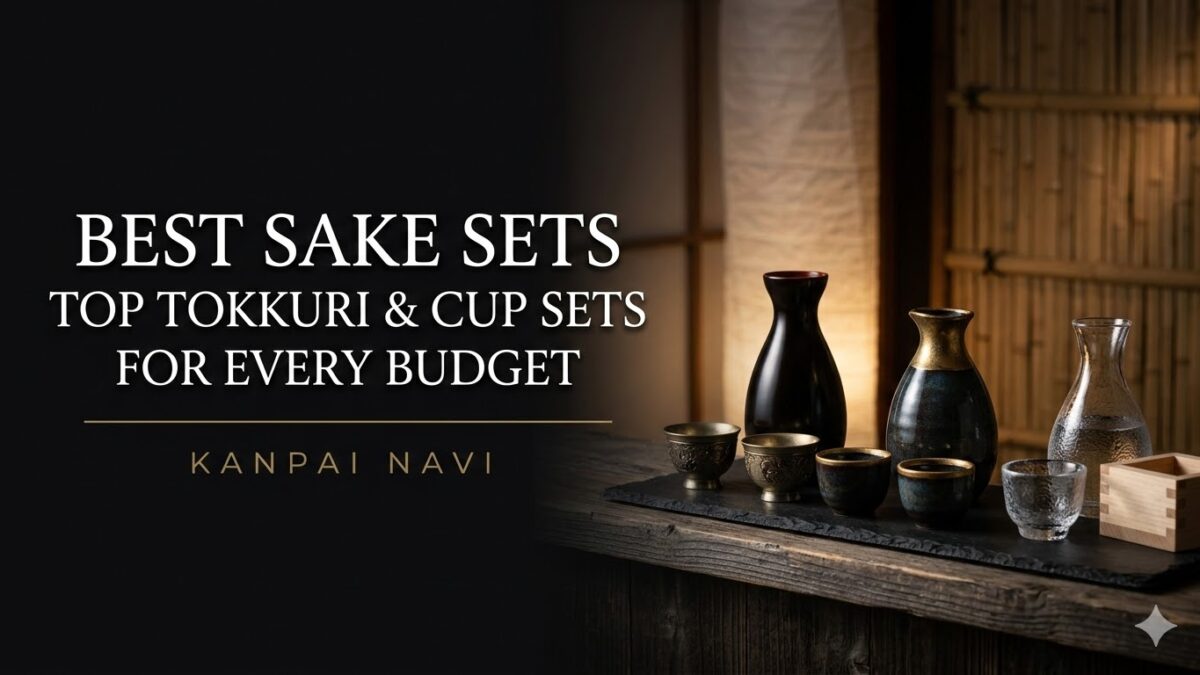
Best Sake Sets: Top Tokkuri & Cup Sets for Every Budget
What You’ll Learn in This Article
A great sake set transforms the way you experience sake. The right tokkuri (flask) and cups don’t just look beautiful — they actively shape the flavor, temperature, and ritual of drinking. Japanese potters have been crafting sake vessels for centuries, and the relationship between vessel and drink is taken as seriously as the sake itself.
Whether you’re buying your first set for home use, looking for a gift, or upgrading to handmade Japanese ceramics, this guide covers everything you need to know about choosing the right sake set.

Supervised by
Daichi Takemoto
Authentic Bartender & Owner of Obanzai Nanchatte, Kobe
With 8 years of experience as a professional bartender and now the owner of "Obanzai Nanchatte" in Kobe, Daichi brings hands-on expertise in Japanese sake, whisky, and food pairing to every article on Kanpai Navi.
Table of Contents
- Best Sake Sets
- Best Overall: Traditional Ceramic Tokkuri Set
- Best for Cold Sake: Glass Sake Set
- Best for Warm Sake: Ceramic with Heat Retention
- Best Gift Set: Masu Sake Set
- Best Premium: Handmade Artisan Set
- Types of Sake Sets
- Tokkuri (徳利) — The Flask
- Ochoko (お猪口) — Small Sipping Cups
- Guinomi (ぐい呑み) — Larger Cups
- Masu (枡) — Wooden Box
- Wine Glass
- How to Choose a Sake Set
- Match to Your Drinking Style
- Material Guide
- Caring for Your Sake Set
- Ceramic and Stoneware
- Glass
- Wood (Masu)
- Where to Buy Sake Sets
- Frequently Asked Questions
- What is a traditional sake set called?
- Do sake cups affect the taste?
- What size tokkuri should I get?
- Can I microwave a ceramic tokkuri?
- What is the overflow glass-in-masu thing?
- The Bottom Line
Best Sake Sets
Here are our top picks across different price ranges and styles.
Best Overall: Traditional Ceramic Tokkuri Set
A classic combination — one ceramic tokkuri (flask) and two to four ochoko (small cups). This is the standard sake set found in izakaya across Japan and the most versatile option for home use.
Look for: Mino-yaki or Arita-yaki ceramics for consistent quality. Sets typically include a 1-go (180ml) or 2-go (360ml) tokkuri.
Price range: $20-50
Best for: Everyday use, warm sake, traditional service.
Best for Cold Sake: Glass Sake Set
Glass sets showcase chilled sake beautifully — you can see the clarity and color of your pour. Many Japanese glass sake sets feature handblown or cut glass (Edo Kiriko) designs that catch the light.
Look for: Heat-resistant glass if you want versatility. Edo Kiriko (cut glass) for premium aesthetics.
Price range: $25-80 (machine-made), $100-300+ (Edo Kiriko)
Best for: Chilled ginjo and daiginjo, wine-style sake service, summer drinking.
Best for Warm Sake: Ceramic with Heat Retention
Thicker, heavier ceramic sets retain heat longer — critical for warm sake (kanzake). Look for sets with a narrow mouth on the tokkuri, which slows heat loss and preserves aromas.
Look for: Stoneware or thick-walled ceramic. Bizen-yaki and Shigaraki-yaki are excellent for heat retention.
Price range: $30-80
Best for: Warm and hot sake service, winter drinking.
Best Gift Set: Masu Sake Set
A masu (wooden box) sake set makes a striking gift. The traditional Japanese cypress (hinoki) masu adds a subtle woody aroma to the sake — a unique and memorable drinking experience. Many gift sets include a glass placed inside the masu, with sake poured until it overflows into the box.
Price range: $15-40
Best for: Gifts, ceremonial occasions, conversation starters.
Best Premium: Handmade Artisan Set
For serious sake enthusiasts, handmade sets from named Japanese potters represent the pinnacle of the craft. Each piece is one-of-a-kind, with subtle variations in glaze, shape, and texture that make every sip unique. Major pottery traditions include:
- Bizen-yaki (Okayama) — Unglazed, earthy, rustic. Said to make sake taste rounder.
- Hagi-yaki (Yamaguchi) — Soft, warm colors. Famous for developing a patina (a tea-staining effect) over years of use.
- Arita-yaki (Saga) — Elegant, white porcelain with blue or colorful painted designs. The “fine china” of sake ware.
- Kutani-yaki (Ishikawa) — Bold, vivid colors and detailed painting. Decorative and functional.
Price range: $80-500+
Best for: Collectors, enthusiasts, meaningful gifts.
Daichi Takemoto
At my bar, I match the cup to the sake. Thin porcelain for delicate daiginjo — it makes the sake taste more elegant. Thick Bizen-yaki for robust junmai — the clay adds an earthy character. And a wine glass for anything I want guests to really smell. The vessel matters more than most people think.
Types of Sake Sets
Understanding the traditional components helps you choose the right set.
Tokkuri (徳利) — The Flask
The tokkuri is the serving flask used to pour sake. Its bulbous shape with a narrow neck serves several practical functions:
- The narrow neck retains heat for warm sake
- The shape controls the pour — preventing splashing
- The wide body allows even heating in a hot water bath
Standard sizes are 1-go (180ml) and 2-go (360ml). For two people sharing warm sake, a 2-go tokkuri is ideal.
Ochoko (お猪口) — Small Sipping Cups
Ochoko are small cups holding 30-50ml — designed for slow, communal sipping. Their small size means sake stays at the proper temperature for the few minutes it takes to drink each pour. In Japanese culture, pouring sake for someone else (rather than yourself) is a gesture of respect and friendship.
Guinomi (ぐい呑み) — Larger Cups
Guinomi are larger than ochoko — typically 50-100ml. The name literally means “gulp drink.” These are used for more casual, solo drinking sessions. Many artisan potters focus on guinomi as their primary creative outlet, making them highly collectible.
Masu (枡) — Wooden Box
Originally a rice-measuring box, the masu has become a ceremonial sake vessel. Made from hinoki (Japanese cypress), it imparts a faint woody fragrance to the sake. The traditional service — a glass set inside the masu with sake overflowing into the box — symbolizes abundance and generosity.
Wine Glass
Increasingly popular, especially for premium ginjo and daiginjo. A wine glass (particularly a tulip shape) concentrates aromatic esters at the rim, allowing you to fully appreciate the fruity and floral notes of aromatic sake. Riedel even produces a sake-specific glass.
| Vessel | Capacity | Best For | Temperature |
|---|---|---|---|
| Ochoko | 30-50ml | Traditional service, communal drinking | Any |
| Guinomi | 50-100ml | Casual solo drinking | Any |
| Tokkuri | 180-360ml | Pouring flask for sharing | Warm preferred |
| Masu | 180ml | Ceremonial, gifts | Room temp / cold |
| Wine glass | 150-250ml | Premium aromatic sake | Chilled |
How to Choose a Sake Set
The right set depends on three factors: how you drink sake, who you’re drinking with, and your aesthetic preference.
Match to Your Drinking Style
- “I drink warm sake mostly” → Thick ceramic tokkuri set. Look for Bizen or Shigaraki ware. Narrow-mouth tokkuri retains heat best.
- “I drink chilled sake mostly” → Glass set or thin porcelain. Wine glasses also work beautifully for cold daiginjo.
- “I drink both” → Get a ceramic set (warm-friendly and works for room temperature) plus a set of wine glasses (for chilled premium sake). Two sets covers all bases.
- “I want something for parties/guests” → A 2-go tokkuri with 4 ochoko. The communal pouring ritual is half the fun.
Material Guide
| Material | Character | Best For | Care Level |
|---|---|---|---|
| Stoneware ceramic | Earthy, rustic, heat-retaining | Warm sake, everyday use | Low (dishwasher safe) |
| Porcelain | Refined, elegant, thin | Cold sake, formal occasions | Medium |
| Glass | Clean, modern, transparent | Cold sake, visual enjoyment | Medium |
| Lacquerware | Luxurious, traditional, warm feel | Formal/ceremonial | High (hand wash only) |
| Wood (hinoki) | Aromatic, rustic, traditional | Ceremonies, novelty | High |
Daichi Takemoto
My personal collection includes about 30 different sake cups — and I use different ones depending on my mood, the season, and the sake. But for someone just starting out, I’d say get one good ceramic tokkuri set and one set of wine glasses. That covers 90% of occasions. You can grow your collection from there.
Caring for Your Sake Set
Proper care extends the life of your sake set and, in the case of certain ceramics, actually improves them over time.
Ceramic and Stoneware
- Before first use: Soak in water for 30 minutes to prevent staining and thermal shock.
- After use: Rinse with warm water. Avoid strong detergent — it can absorb into unglazed clay.
- Drying: Air dry completely before storing. Trapped moisture can cause mold in unglazed pottery.
- Patina: Some ceramics (especially Hagi-yaki) develop a beautiful tea-stain patina over years of use. This is intentional and valued — don’t try to scrub it off.
Glass
- Hand wash delicate or cut glass. Standard glass sake cups are usually dishwasher safe.
- Avoid extreme temperature changes — don’t pour boiling water into a cold glass.
Wood (Masu)
- Rinse with water only — no soap. The wood is absorbent.
- Air dry thoroughly after each use.
- The hinoki aroma fades over time. Some people replace their masu annually for the fresh cedar experience.
Where to Buy Sake Sets
- Japanese grocery stores (Mitsuwa, Nijiya) — Often carry basic ceramic sets at reasonable prices.
- Amazon — Wide selection from budget to mid-range. Be cautious of quality — read reviews.
- Toiro (toirokitchen.com) — Curated selection of Japanese tableware including sake sets.
- MTC Kitchen — Japanese culinary tools and tableware, including artisan sake vessels.
- Direct from Japanese potters — If visiting Japan, buying directly from pottery towns (Bizen, Hagi, Arita) gives you access to unique pieces at local prices.
Frequently Asked Questions
Here are the most common questions about sake sets.
What is a traditional sake set called?
A traditional set consists of a tokkuri (flask/carafe) and ochoko (small cups). Together, they’re sometimes simply called a sake set (酒器セット, shuki setto). The pouring ritual — where you fill others’ cups rather than your own — is an important part of Japanese drinking culture.
Do sake cups affect the taste?
Yes. The material, thickness, and shape of a sake cup all influence how sake tastes. Thin porcelain makes sake taste more delicate. Thick, unglazed stoneware adds earthiness. Wine glasses concentrate aromas. The same sake can taste noticeably different across different vessels.
What size tokkuri should I get?
For two people, a 2-go (360ml) tokkuri is ideal. For solo drinking or a small taste, a 1-go (180ml) is sufficient. Larger tokkuri (3-go) exist but are less common.
Can I microwave a ceramic tokkuri?
Most ceramic tokkuri are microwave safe, but the traditional hot water bath method produces more even heating. If microwaving, use 50% power in 30-second intervals. Never microwave metallic-glazed or lacquered vessels.
What is the overflow glass-in-masu thing?
This service style is called mokkiri. A glass is placed inside a masu, and sake is poured until it overflows into the wooden box. It symbolizes generosity and abundance. You sip from the glass first, then drink the overflow from the masu.
The Bottom Line
The right sake set elevates every aspect of the drinking experience — from the visual beauty of the pour to the way the vessel shapes flavor and temperature. For most people, a quality ceramic tokkuri set ($20-50) covers everyday and warm sake service, while a set of wine glasses adds versatility for chilled premium sakes. As you explore further, the world of Japanese pottery — Bizen, Hagi, Arita, Kutani — offers endless depth for collectors. Start simple, drink often, and let your collection grow naturally.


